
Languages
Learn Korean Online with K-Dramas: Shadowing Guide

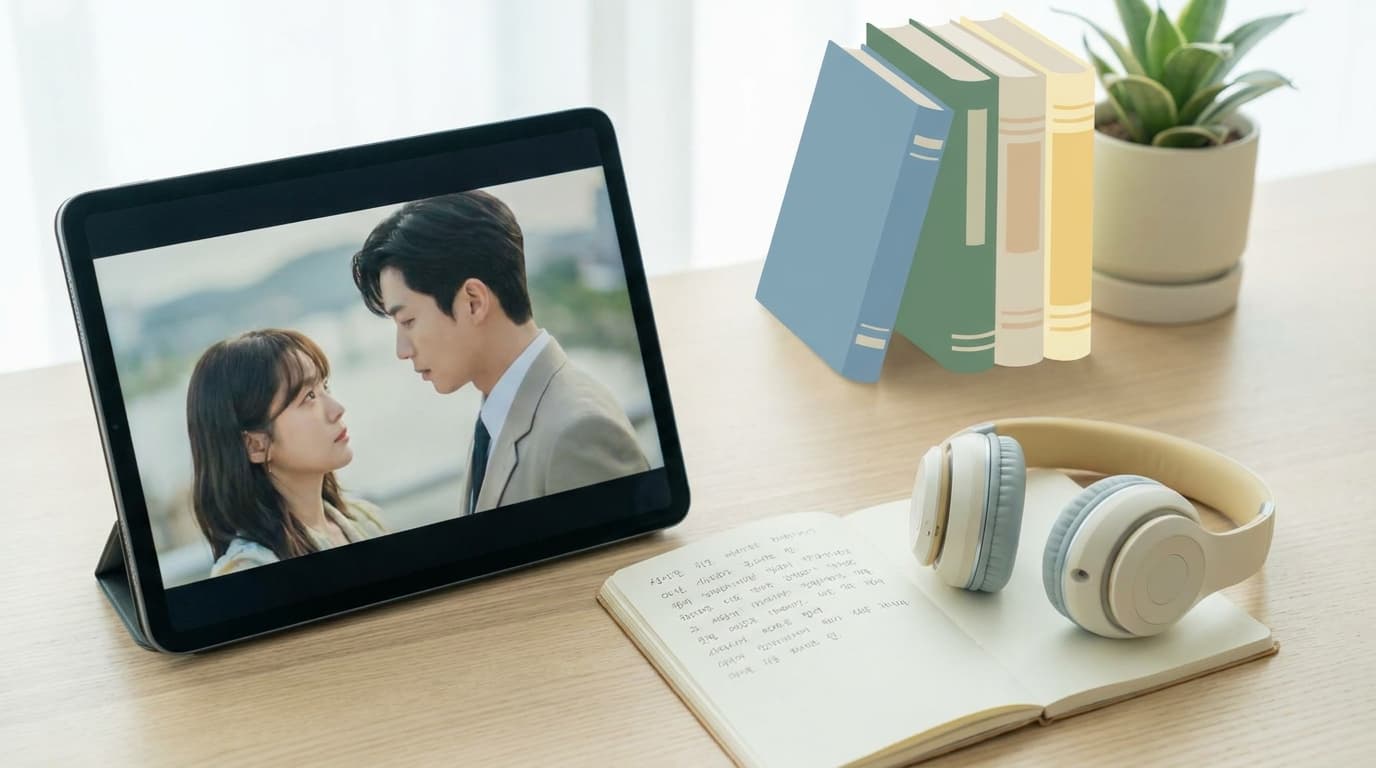
Learn Korean Online with K-Dramas and Short Videos: A Practical Shadowing Guide
Most learners watch K-dramas with subtitles and still freeze when they try to speak. This guide shows you how to turn short Korean video clips into a repeatable shadowing routine that actually builds speaking speed.
Shadowing works best when you can slow a clip down, read a bilingual script, and check what each word means. That is exactly what Corodomo is built for. Paste a YouTube link or upload a short video, and it auto-generates bilingual subtitles you can study line by line. You also get detailed AI word lookup, pronunciation and speaking practice with CoroAI, and quizzes or flashcards made from the same clip. So instead of pausing a drama, guessing, and giving up, you get a study loop you can finish in fifteen minutes.
- Why shadowing beats passive K-drama watching
- How to choose the right clips and length
- The 5-step shadowing routine
- Using short videos and YouTube for daily practice
- Common mistakes and how to fix them
- A weekly plan for busy learners
- FAQ
- Conclusion
Why shadowing beats passive K-drama watching
Passive watching trains your ear a little and your mouth not at all. You hear Korean, you read English subtitles, and your brain files the scene as "understood." But speaking is a motor skill. If your mouth never repeats the sounds, nothing changes.
Shadowing means speaking along with the audio, almost simultaneously, copying rhythm, speed, and intonation. You are not translating. You are imitating a real speaker, like singing along to a song you love. This builds the muscle memory that makes Korean feel automatic later.
Korean is a good fit for shadowing because sentence endings carry so much meaning. Politeness levels, questions, and softeners all live at the end of the sentence. When you shadow, you absorb those endings as sound patterns before you can explain them grammatically. That is an advantage, not a shortcut.
One honest note: shadowing is tiring. Twenty focused minutes is worth more than an hour of half-attention. Treat it like a workout with sets and rest, not like entertainment.
- Shadow for 10–20 minutes per session, not longer at first.
- Choose clips where you understand roughly 70–80% of the meaning.
- Always shadow out loud, even quietly — mumbling silently does nothing.
- Record yourself once per week and compare with the original audio.
- Repeat the same clip across several days before moving on.
Example line to shadow:
안녕하세요, 만나서 반가워요. – annyeonghaseyo, mannaseo bangawoyo – "Hello, nice to meet you."
Notice how 반가워요 rises gently and the final 요 is short, not stressed.
How to choose the right clips and length
The biggest beginner mistake is shadowing a fast, emotional scene full of slang. Start with calm dialogue: greetings, ordering food, asking directions, apologising, making small talk. These scenes repeat the same grammar patterns, so your practice compounds.
Length matters too. A 30-second to 2-minute clip is ideal. Long enough to have real context, short enough to loop many times without boredom. If a scene is longer, cut it into two or three pieces and treat each as its own unit.
Subtitles decide whether a clip is usable. You want Korean subtitles plus a translation, ideally on the same screen. With Corodomo, pasting a YouTube link generates bilingual subtitles automatically, so you can check meaning without leaving the video. That removes the constant tab-switching that kills momentum.
Finally, pick clips you genuinely enjoy. You will replay them ten times. If the scene bores you, you will quit on day three.
- Good: café orders, phone calls, meeting a friend, asking for help.
- Good: short interview clips and vlogs with clear single speakers.
- Avoid at first: shouting matches, rap, heavy dialect, overlapping voices.
- Avoid at first: scenes with background music louder than the dialogue.
- Save 5–10 clips in a playlist so you never waste time choosing.
| Korean | Reading | Meaning |
|---|---|---|
| 주문할게요 | jumunhalgeyo | I'll order now |
| 잠깐만요 | jamkkanmanyo | Just a moment |
| 다시 말해 주세요 | dasi malhae juseyo | Please say that again |
The 5-step shadowing routine
This routine takes about 15 minutes per clip. Do it in the same order every time so it becomes automatic.
Step 1 — Listen blind (2 min). Play the clip with no subtitles. Do not worry about meaning. Just notice speed, pauses, and where the speaker's voice rises or falls.
Step 2 — Read with subtitles (4 min). Turn on bilingual subtitles and read along. Look up any word that blocks the meaning. On Corodomo, the AI word lookup gives you the reading and meaning in place, and you can push difficult words straight into flashcards.
Step 3 — Shadow in chunks (5 min). Pause after each sentence and repeat it immediately, copying the melody. Then play two sentences and shadow both without pausing. Build up until you can shadow the whole clip.
Step 4 — Record and compare (3 min). Record yourself on your phone. Listen once. Mark one thing to fix: a vowel, an ending, or the rhythm of one phrase. Do not try to fix everything.
Step 5 — Lock it in (2 min). Add three to five words from the clip to your flashcard deck. Then write one new sentence of your own using the same pattern. This is where shadowing turns into real speaking ability.
- Never skip Step 1 — blind listening trains prediction.
- Shadow sentence by sentence before trying the full clip.
- Fix one pronunciation issue per session, not five.
- Reuse the clip tomorrow; repetition beats novelty.
- Say your own sentence out loud at the end, not just in your head.
Pattern to reuse:
저는 커피를 좋아해요. – jeoneun keopireul joahaeyo – "I like coffee."
Swap the noun: 저는 한국어를 좋아해요 – "I like Korean." Same rhythm, new word.
Using short videos and YouTube for daily practice
Short videos are the perfect shadowing unit because they are already edited down to one idea. A 45-second clip about making coffee, buying a ticket, or introducing yourself gives you a complete, repeatable script.
YouTube is a goldmine, but it is also a trap. Without a system, you scroll for twenty minutes and study nothing. The fix is a simple pipeline: find a clip, generate subtitles, shadow it, then extract vocabulary. Corodomo supports this end to end, including quizzes and an AI Q&A that understands the video, so you can ask "why did she use that ending?" and get an answer about the actual line you just heard.
Pronunciation practice deserves its own slot. Shadowing copies a native speaker; speaking practice makes you produce Korean from scratch. CoroAI's pronunciation and speaking practice is smooth enough to use daily, which matters more than any single feature. Ten minutes of speaking beats an hour of reading about speaking.
For listening accuracy, add dictation. Listen to one short line and type what you hear, then check. This exposes the sounds you are still guessing at — usually endings, doubled consonants, and casual contractions.
- Build a playlist of 10 short clips on one theme, such as food.
- Generate bilingual subtitles before you start, not mid-session.
- Do one dictation line per session to sharpen listening.
- Use quizzes on the same clip to test recall, not recognition.
- Keep a "shadowing log": date, clip, one thing you improved.
| Korean | Reading | Meaning |
|---|---|---|
| 이거 얼마예요? | igeo eolmayeyo? | How much is this? |
| 어디에서 왔어요? | eodieseo wasseoyo? | Where are you from? |
| 천천히 말해 주세요 | cheoncheonhi malhae juseyo | Please speak slowly |
Common mistakes and how to fix them
Mistake 1: Shadowing with English subtitles only. You end up reading English while Korean plays in the background. Fix: use Korean subtitles as the main line, with translation as support.
Mistake 2: Chasing speed too early. Beginners try to match a fast speaker and produce mush. Fix: slow the playback to 0.75x, master the rhythm, then return to normal speed.
Mistake 3: Never reviewing. A clip shadowed once disappears in days. Fix: repeat each clip three times across a week before retiring it.
Mistake 4: Ignoring the sentence ending. In Korean, the ending carries politeness and mood. Fix: when you extract vocabulary, always store the full ending, not just the stem.
Mistake 5: Studying only input. Watching and shadowing still leaves gaps in production. Fix: finish every session by writing and saying one original sentence, and use vocabulary tests — choose the correct meaning, listen and type, type the reading, and write an example sentence — to force real recall.
- Keep Korean subtitles visible; treat English as a backup.
- Use 0.75x speed until the rhythm feels comfortable.
- Revisit each clip three times in one week.
- Store words with their full ending and politeness level.
- Test yourself weekly with a mixed quiz, not just re-watching.
Ending matters:
밥 먹었어? – bap meogeosseo? – "Did you eat?" (casual, to a close friend)
밥 먹었어요? – bap meogeosseoyo? – same question, polite. Same words, different ending, different relationship.
A weekly plan for busy learners
You do not need two hours a day. You need consistency and a clear structure. Here is a plan that fits around a full-time job, using four short sessions plus one review session.
Monday (15 min): Pick one new clip. Blind listen, then read with bilingual subtitles. Extract five words.
Tuesday (15 min): Shadow the same clip in chunks. Record yourself once.
Wednesday (15 min): Dictation on three lines from the clip. Then shadow the full clip at normal speed.
Thursday (15 min): Speaking practice with CoroAI on the same topic. Write two original sentences.
Friday (10 min): Quiz yourself on the week's vocabulary. Any word you miss goes back into the deck.
Weekend (optional, 20 min): Watch one episode of a K-drama with Korean subtitles only. No shadowing. Just enjoy it and notice how much more you catch.
Track one number only: sessions completed per week. Aim for four or five. If you miss a day, do not double up — just continue the next day. A missed session is fine; a broken habit is expensive.
- Same time, same place, same 15 minutes.
- One clip per week, repeated across sessions.
- Always end with one original spoken sentence.
- Review on Friday so nothing leaks out of memory.
- Keep one "fun" session with no study goals.
| Korean | Reading | Meaning |
|---|---|---|
| 오늘 뭐 해요? | oneul mwo haeyo? | What are you doing today? |
| 내일 만나요 | naeil mannayo | See you tomorrow |
| 잘 먹었습니다 | jal meogeotseumnida | Thanks for the meal |
FAQ
How long until shadowing improves my Korean speaking?
Most learners notice smoother rhythm and faster recall after about four to six weeks of consistent practice, roughly four sessions per week (this is a general estimate, not a measured result). Pronunciation accuracy usually improves more slowly than confidence, because your mouth needs repetition, not understanding.
Can I learn Korean only from K-dramas?
Dramas are excellent for listening, rhythm, and everyday phrases, but they rarely give you structured grammar or writing practice. Use dramas and short videos as your speaking engine, and pair them with vocabulary review and short writing tasks so you can also produce Korean, not just imitate it.
Should I shadow with Korean subtitles or English subtitles?
Korean subtitles should be your main line, with English as support for meaning. If you shadow with English only, your eyes do the work and your ears stay passive. If Korean subtitles feel overwhelming, slow the video to 0.75x and shadow shorter chunks.
What if I cannot keep up with the speaker's speed?
Slow it down. Shadowing at 0.75x while copying the rhythm is far more useful than stumbling at full speed. Once a clip feels comfortable at reduced speed, return to normal speed and shadow again. Speed comes from accuracy, not from forcing it.
Is shadowing useful for beginners with very little vocabulary?
Yes, if the clips are simple. Pick greetings, ordering, and self-introductions. Shadowing teaches sound and rhythm, which beginners need early. Just keep vocabulary work alongside it, so the phrases you imitate also become words you can use on your own.
Conclusion
Shadowing turns K-dramas and short videos from passive entertainment into real speaking practice. The key is a small, repeatable loop: listen blind, read with bilingual subtitles, shadow in chunks, record once, then extract vocabulary.
Three things matter most. First, choose short, calm clips and repeat them across a week instead of hunting for new material. Second, always finish with one original spoken sentence, so imitation becomes production. Third, keep a fixed schedule of four or five short sessions, because consistency beats intensity every time.
Do this for a month with a tool like Corodomo, which handles bilingual subtitles, word lookup, speaking practice, quizzes, and flashcards from the same video, and you will hear the difference before you can explain it.
Try Corodomo: Learn languages · Learn via Video · Exam practice