

Languages


Learn Korean Online: The Most Effective Guide for Busy Pros

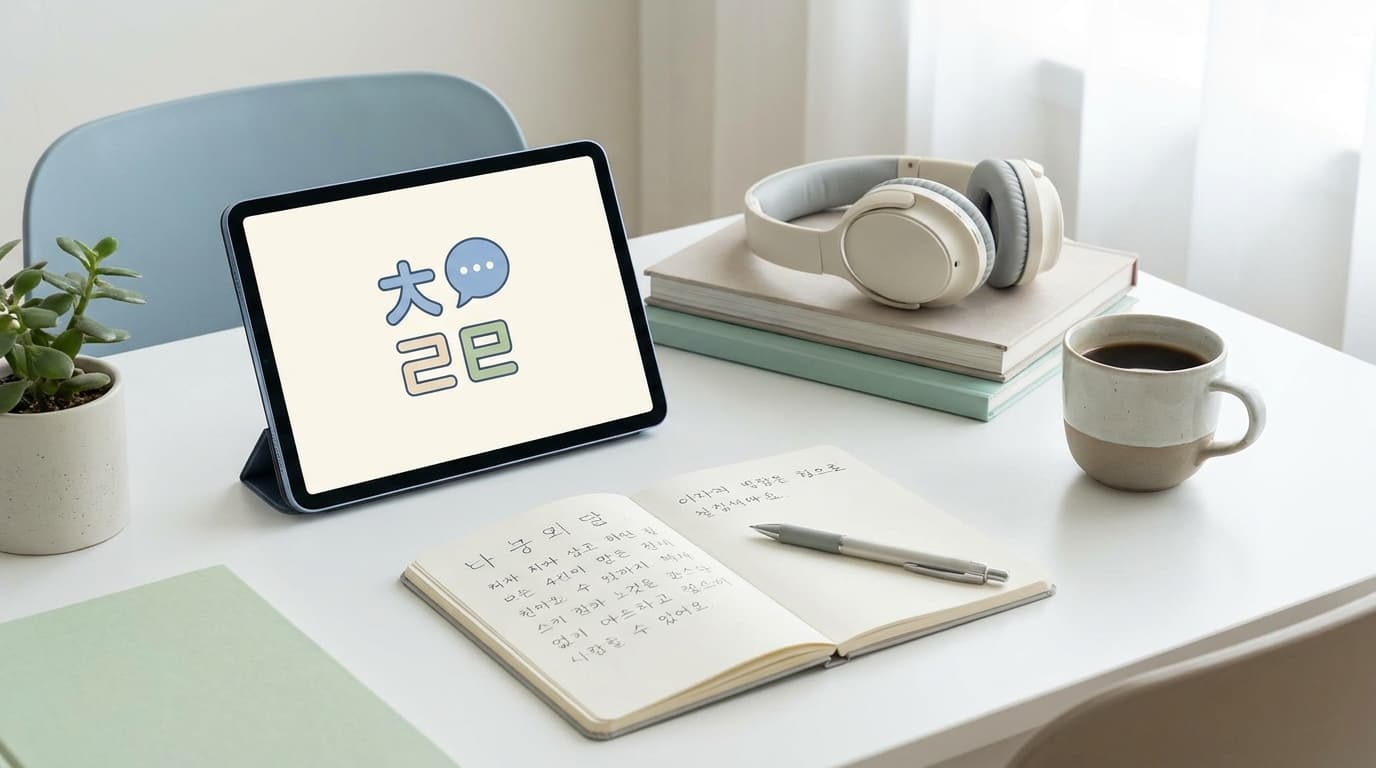
Balancing a demanding career with the challenge of learning a new language often leads to burnout and inconsistent study habits. By integrating language acquisition into your existing routine, you can make steady progress without sacrificing your professional responsibilities.
The secret lies in shifting from passive textbook study to active, content-driven engagement. This is where Corodomo becomes a useful part of your daily schedule. Its Korean videos, from news clips to dramas, come with bilingual subtitles and romanization, turning each one into a structured lesson. You can tap words to look them up during your commute, practice your pronunciation with AI-scored shadowing in short bursts, and ensure that your limited study time is spent on high-impact, real-world Korean vocabulary.
- Mastering Micro-Learning for the Workplace
- Developing Active Listening Skills Through Media
- Optimizing Vocabulary Retention for Busy Schedules
- Building Speaking Confidence with AI Feedback
- Creating a Sustainable Study Routine
- Frequently Asked Questions
Mastering Micro-Learning for the Workplace
For a busy professional, finding one solid hour to study is often impossible. However, micro-learning (studying in 5 to 10-minute intervals) is surprisingly effective. When you break your language journey into smaller chunks, you reduce the mental friction that prevents you from starting.
You can use your morning coffee break or your commute to review single vocabulary sets or watch a short video clip. The goal is to keep the language alive in your mind throughout the day rather than forcing a heavy, exhausting session once a week.
- Focus on learning three new business-related phrases per day.
- Use your mobile device to complete one quick quiz during downtime.
- Avoid "cramming" sessions that lead to cognitive fatigue.
Korean Romanization Meaning 회의 준비 hoe-ui jun-bi Meeting preparation 일정 확인 il-jeong hwa-gin Checking the schedule
Developing Active Listening Skills Through Media
Passive listening, like playing background audio, is helpful but insufficient for true fluency. You must engage with the material. By using authentic Korean media, you expose yourself to natural speech patterns, regional accents, and idiomatic expressions that textbooks rarely cover.
When you watch videos, focus on the speaker's intent rather than just translating word-for-word. Tools like Corodomo provide bilingual subtitles split into sentences, allowing you to toggle between languages to confirm your comprehension instantly. This removes the frustration of getting stuck on a single unknown word, keeping your momentum high.
- Watch short news segments to hear professional, clear Korean.
- Use subtitles to bridge the gap between spoken audio and visual understanding.
- Attempt to dictate (transcribe) one sentence of the dialogue each session.
Korean Romanization Meaning 어떻게 생각하세요? eo-tteo-ke saeng-ga-ka-se-yo? What do you think? 다시 말씀해 주시겠어요? da-si mal-sseum-hae ju-si-ge-sseo-yo? Could you repeat that?
Optimizing Vocabulary Retention for Busy Schedules
Memorizing lists of words is rarely effective for professionals who need to communicate in specific contexts. Instead, prioritize "high-frequency vocabulary" that appears in the industry or social scenarios you encounter most often. The key to retention is not repetition, but using the word in an example sentence.
Save only the words you actually need and review them as flashcards with spaced repetition, so you don't waste time on words you already know. Test yourself in more than one way (hear the word, recall the meaning, write it, and use it in your own example sentence) to force your brain to recall information in different ways.
- Use digital flashcards to review during transit.
- Always learn words within the context of a full sentence.
- Focus on verbs first; they form the core of Korean sentence structure.
Korean Romanization Meaning 진행하다 jin-haeng-ha-da To proceed/conduct 협력하다 hyeom-nyeo-ka-da To cooperate
Building Speaking Confidence with AI Feedback
The biggest hurdle for professional learners is the fear of sounding unnatural. You need a safe space to practice speaking without the judgment of a native colleague. AI-driven pronunciation tools provide immediate, objective feedback on your cadence, pitch, and syllable emphasis.
By mimicking the audio in your practice videos, you train your mouth to move in new ways. Regular shadowing with AI pronunciation feedback helps bridge the gap between "knowing" the words and "speaking" the language fluently. Even five minutes of speaking practice daily will yield significant improvements in your ability to express yourself during meetings.
- Record yourself reading a sentence and compare it to the video audio.
- Focus on the "flow" of the sentence rather than just individual sounds.
- Practice common professional scripts to build muscle memory.
Creating a Sustainable Study Routine
Consistency beats intensity every time. A 15-minute daily habit is vastly superior to a 3-hour "binge" study session on the weekend. To succeed, you must integrate Korean into your environment. Use digital tools to gamify your progress, turning boring commutes into an opportunity for growth.
Consider linking your language goals to your professional goals. If you have an upcoming trip to Seoul or a Korean project partner, use those as triggers to focus your study. When your learning feels relevant to your daily life, your brain is much more likely to retain the information you work so hard to learn.
- Schedule your study time in your calendar just like a work meeting.
- Keep your learning materials accessible on your phone at all times.
- Reward your streaks to maintain motivation throughout the month.
Frequently Asked Questions
How much time do I need daily to see results?
Even 15 to 20 minutes of high-quality, focused practice per day can lead to measurable progress within a few months, provided you remain consistent.
Is it possible to learn Korean without a tutor?
Yes, especially with modern AI-assisted tools that provide instant feedback on pronunciation and vocabulary, allowing you to self-correct effectively.
Which part of Korean is the most difficult for professionals?
Most learners find the honorifics and the nuances of social/professional hierarchy to be the most challenging aspect, but regular exposure through media helps clarify these patterns.
Can I learn to write and type in Korean easily?
Learning to read Hangul can be done in an afternoon. Typing requires some practice, but consistent dictation exercises will make you proficient quickly.
Conclusion
Learning Korean as a busy professional is entirely achievable when you prioritize quality over quantity. Remember these three key points: utilize micro-learning to fit study into your gaps, leverage authentic media to improve your listening and speaking, and use AI-backed tools to ensure your vocabulary retention is active and context-driven. Start your journey today by making Korean a small but consistent part of your daily professional life.
Fit Korean into your workday with short Korean videos on Corodomo, and pick up workplace phrases from our guide to Korean for business.