
Ngôn ngữ
Learn Korean for Travel: Essential Phrases & K-Drama Shadowing

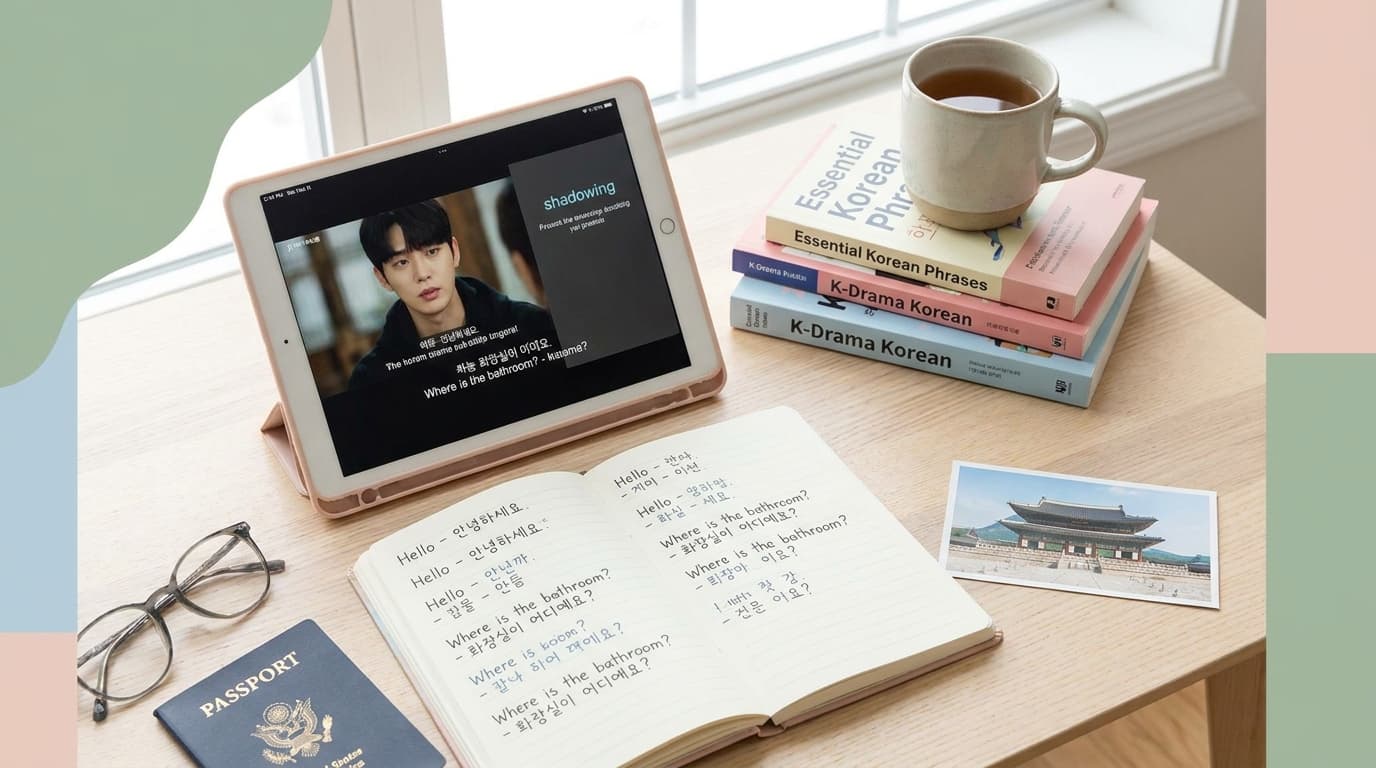
Learn Korean Online for Travel: Essential Phrases, Pronunciation, and Shadowing with K‑Drama Clips
Traveling to Korea can be overwhelming without language basics, but focused practice makes communication easy.
Corodomo turns everyday videos into interactive lessons, letting you paste a YouTube K‑Drama clip or upload a travel vlog and instantly receive bilingual subtitles. Its AI word lookup, pronunciation practice, and flashcard system keep you drilling the exact expressions you need for real‑world travel. With Corodomo, you can watch a Korean drama, shadow the dialogue, and test yourself on the spot—all in one platform. Corodomo makes busy self‑learners turn screen time into speaking power.
- Why Korean is a Must‑Know Language for Travel
- Core Travel Phrases You Can Use Today
- Mastering Korean Pronunciation for Clear Communication
- Shadowing with K‑Drama Clips: A Fun, Effective Method
- Using Corodomo to Accelerate Your Travel Korean
- FAQ
- Conclusion
Why Korean is a Must‑Know Language for Travel
South Korea’s public transport, street signs, and menus are increasingly English‑friendly, yet locals appreciate effort in Korean. Speaking even a few words shows respect and often earns better service.
Learning Korean also opens cultural doors. You’ll understand polite forms, grasp subtle nuances, and feel more comfortable in bustling markets or quiet temples.
- Learn the two basic politeness levels: informal (반말) and formal (존댓말).
- Focus on greetings and thank‑you phrases first; they are used most often.
- Practice numbers early; they appear in prices, train tickets, and phone numbers.
안녕하세요 – annyeonghaseyo – Hello (formal)
Core Travel Phrases You Can Use Today
These phrases cover airports, hotels, restaurants, and emergencies. Memorize them with the Romanization provided, then practice the Hangul spelling.
Use Corodomo’s flashcard mode to test yourself on each phrase’s meaning and pronunciation.
- Write each phrase on a sticky note and place it on your mirror.
- Record yourself saying the phrase, then compare with the native audio.
- Swap the Korean phrase for its English meaning in daily conversation practice.
| Korean (Hangul) | Romanization | English |
|---|---|---|
| 공항 어디에 있어요? | gonghang eodie isseoyo? | Where is the airport? |
| 체크인하고 싶어요. | chekeuinhago sipeoyo. | I’d like to check in. |
| 메뉴 주세요. | menyu juseyo. | Please give me the menu. |
| 화장실은 어디에 있나요? | hwajangshil-eun eodie innayo? | Where is the restroom? |
| 도와 주세요! | dowa juseyo! | Help, please! |
Mastering Korean Pronunciation for Clear Communication
Korean pronunciation hinges on consonant aspiration and vowel length. Mispronouncing a single sound can change meaning dramatically.
Corodomo’s AI pronunciation tool highlights each syllable’s stress and offers real‑time feedback, so you can adjust before speaking with locals.
- Practice the three basic vowel sounds: ㅏ (a), ㅓ (eo), and ㅗ (o).
- Distinguish between plain, tense, and aspirated consonants (ㄱ, ㄲ, ㅋ).
- Listen to minimal pairs, such as 배 (bae – “pear”) vs. 빼 (ppa – “to exclude”).
밥 – bap – rice (noun) vs. 밥 – ppap – “to press” (verb)
Shadowing with K‑Drama Clips: A Fun, Effective Method
Shadowing means you repeat spoken Korean immediately after hearing it, matching rhythm, intonation, and speed. K‑Drama provides natural, varied dialogue that keeps learning enjoyable.
Choose short scenes (30‑60 seconds) that include travel‑related vocabulary. Upload the clip to Corodomo, generate bilingual subtitles, and use the “shadow” mode to record yourself line‑by‑line.
- Select a clip with clear subtitles; avoid background music that drowns speech.
- Pause after each sentence, repeat aloud, then compare with the native audio.
- Gradually increase speed as you gain confidence.
| Line (Hangul) | Romanization | English |
|---|---|---|
| 지금 어디 가요? | jigeum eodi gayo? | Where are you going now? |
| 서울역에 가고 싶어요. | seoul-yeog-e gago sipeoyo. | I want to go to Seoul Station. |
Using Corodomo to Accelerate Your Travel Korean
Corodomo integrates the three pillars of this guide: essential phrases, pronunciation, and shadowing. Its AI generates bilingual subtitles, so you never need separate resources.
The platform also offers quizzes that test meaning, listening, typing, and sentence creation—all tailored to the video you just practiced.
- Upload a K‑Drama clip, then use the built‑in word lookup to add new vocabulary to your flashcards.
- Take the “type the reading” test to reinforce Hangul recognition.
- Use the “write an example sentence” challenge to apply new words in travel contexts.
Example flashcard: 예약 – ye-yak – reservation (noun)
FAQ
How much Korean do I need before traveling to Korea?
You can get by with basic greetings, numbers, and polite phrases. Even a 5‑minute daily practice session with Corodomo can build enough confidence for a week‑long trip.
Can I learn Korean pronunciation without a teacher?
Yes. Corodomo’s AI pronunciation feedback mimics a native speaker’s ear, allowing you to self‑correct as you practice shadowing.
What type of K‑Drama scenes are best for travel vocabulary?
Look for airport arrivals, restaurant meals, street market bargaining, and hotel check‑in scenes. These naturally contain the phrases you’ll need.
Is it possible to practice speaking without a microphone?
Corodomo works with any device that records audio. Even a smartphone mic provides enough quality for the AI to evaluate your speech.
How can I track my progress?
Corodomo logs quiz scores, flashcard reviews, and shadowing sessions, giving you a clear picture of improvement over time.
Conclusion
Traveling in Korea becomes smoother when you master essential phrases, clear pronunciation, and the shadowing technique. Corodomo bundles these tools into one seamless experience, turning video time into language practice.
Remember the three key points: focus on polite core phrases, fine‑tune your sounds with AI feedback, and shadow short K‑Drama clips daily.
[Try Corodomo, in English]: [Learn languages, in English] · [Learn via Video, in English] · [Exam practice, in English]