
Ngôn ngữ
Mastering Japanese Tech Interviews: Essential Coding Phrases

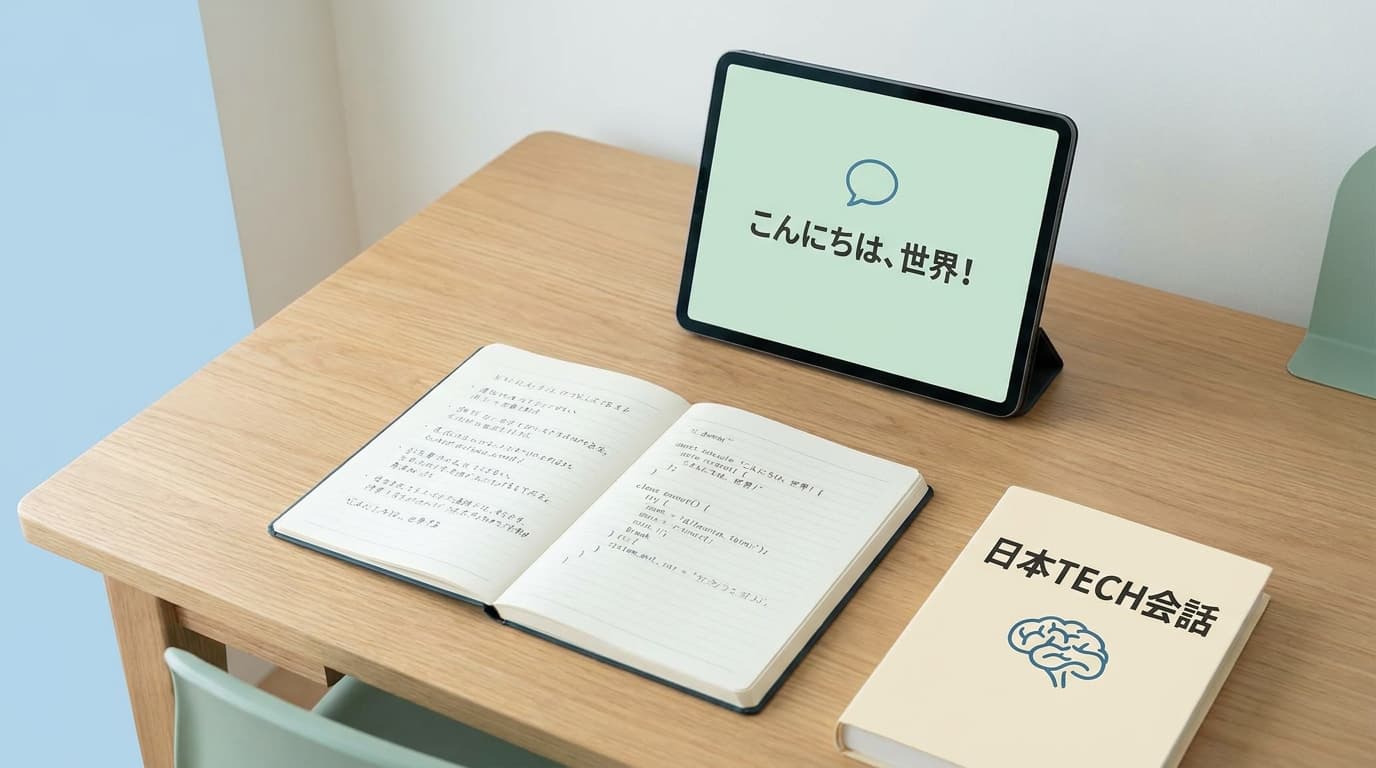
Preparing for a Japanese tech interview: Essential phrases for coding assessments
Navigating a technical interview in a foreign language is daunting, especially when you need to explain complex logic under pressure. By mastering specific industry terminology and common conversational patterns, you can shift the focus from your language skills to your technical expertise.
To bridge the gap between technical knowledge and language fluency, many professionals now turn to Corodomo. By using Corodomo, you can practice by watching actual Japanese tech tutorials or mock interview videos, using the platform’s bilingual subtitles to capture nuances. You can also leverage CoroAI for pronunciation practice to ensure your technical explanations sound natural, making your transition into a Japanese-speaking dev team much smoother.
- Understanding the interview flow
- Technical vocabulary for coding
- Explaining your thought process
- Handling code reviews and feedback
- Polite professional etiquette
- FAQ section
Understanding the interview flow
Japanese technical interviews often follow a structured path. Understanding the stages helps you prepare your responses in advance. Typically, you will start with a self-introduction, followed by a technical screening, a live coding challenge, and finally, a Q&A session where you ask the interviewer about the company culture or the 仕事 (shigoto / work) environment.
Preparation is key. You should be ready to discuss your past projects and your technical stack. Don't just memorize scripts; understand the logic behind the phrases. Being able to explain why you chose a specific algorithm or data structure is more important than using perfect grammar. Focus on clarity and professional tone.
- Prepare a 60-second summary of your technical background.
- Practice explaining your favorite programming language in simple terms.
- Anticipate questions about potential challenges you faced in previous projects.
| Japanese | Reading | Meaning |
|---|---|---|
| 自己紹介をお願いします | Jiko shoukai o onegai shimasu | Please introduce yourself. |
| 技術的な質問をします | Gijutsuteki na shitsumon o shimasu | I will ask technical questions. |
Technical vocabulary for coding
Coding interviews require a specific set of vocabulary that differs from daily conversation. You need to be comfortable using terms related to algorithms, complexity, and system architecture. Using the right terms demonstrates your professional experience.
When you are unsure of a term, it is perfectly fine to use the English loanword, as many Japanese tech companies use them extensively. However, knowing the Japanese equivalent shows a higher level of preparation. Use tools like the Japanese dictionary on Corodomo to look up precise definitions of technical terms as you encounter them in videos.
- Master common terms like "Time complexity" and "Memory management."
- Label your variables clearly in your code to make explaining them easier.
- Practice writing comments in Japanese to get comfortable with the character set.
{計算量} – {keisanryou} – {Computational complexity}
Explaining your thought process
The most important part of a live coding assessment is the "Think Aloud" process. In Japan, showing how you arrive at a solution is often valued as much as the final code. You should describe your steps as you write them. If you get stuck, explain what you are considering instead of staying silent.
Use transition phrases to connect your ideas. Phrases like "firstly," "next," and "therefore" are essential for maintaining a logical flow. If you find yourself struggling to articulate a complex concept, simplify the sentence structure. It is better to use short, correct sentences than one long, confusing one.
- Use phrases like "まず" (mazu - firstly) to start your explanation.
- State your assumptions early: "Assume the input is always sorted."
- Ask for clarification if the prompt is unclear: "確認させてください" (Kakunin sasete kudasai - Let me confirm).
| Japanese | Reading | Meaning |
|---|---|---|
| まず、配列をソートします | Mazu, hairetsu o sooto shimasu | First, I will sort the array. |
| このアプローチは効率的です | Kono apuroochi wa kouritsuteki desu | This approach is efficient. |
Handling code reviews and feedback
Receiving feedback in a foreign language can be stressful. The key is to remain objective. If the interviewer points out a bug or suggests a better way to implement a function, treat it as a collaborative discussion. Use polite language to acknowledge their input, even if you disagree.
Practice phrases that allow you to defend your code politely. Instead of saying "You are wrong," try saying "That is an interesting point, let me consider that." This keeps the atmosphere professional and collaborative. You can use Corodomo's AI Q&A features to simulate these feedback sessions by uploading interview videos and asking the AI to pose counter-arguments.
- Always thank the interviewer for their feedback.
- Ask for specific examples if you don't understand the criticism.
- Acknowledge their expertise: "勉強になりました" (Benkyou ni narimashita - I learned a lot).
Polite professional etiquette
In Japanese corporate culture, the way you speak is just as important as what you say. Using Keigo (honorific language) is expected, but don't let it paralyze you. Stick to standard polite forms (Desu/Masu) if you aren't confident with complex honorifics. Being clear and polite is better than being overly formal and making mistakes.
Remember that your body language and tone also count. Maintain eye contact, smile, and show enthusiasm for the role. If you are learning Japanese for a specific role, checking the study resources for business Japanese can give you a significant edge in your overall presentation.
- Use "Desu/Masu" forms consistently.
- Practice your "Onegai shimasu" (please) and "Arigatou gozaimasu" (thank you).
- Keep your workspace clean and your screen sharing ready.
FAQ section
Do I need to speak perfect Japanese to get a job?
No. Most tech companies prioritize your technical skills. As long as you can explain your logic clearly and communicate effectively with the team, you can succeed even if your Japanese is not perfect.
Should I use English tech terms or Japanese ones?
In the Japanese tech industry, many English loanwords are standard. Use the English term if it is the industry standard (e.g., "API," "Cloud," "Container"), but learn the Japanese context surrounding it to sound more natural.
How can I practice for a live coding interview alone?
Use platforms like Corodomo to watch mock interviews, record yourself explaining code, and use AI tools to check your grammar and pronunciation. Practicing out loud is the most effective way to build confidence.
What if I don't understand a question?
It is perfectly acceptable to ask for clarification. Say "もう一度お願いします" (Mou ichido onegai shimasu - Could you repeat that?) or "すみません、質問の意味を教えていただけますか?" (Sumimasen, shitsumon no imi o oshiete itadakemasu ka? - Excuse me, could you explain the meaning of the question?).
Conclusion
Preparing for a Japanese tech interview comes down to three main pillars: understanding the interview structure, mastering technical vocabulary, and maintaining a professional, collaborative tone. By using tools like Corodomo, you can immerse yourself in real-world technical Japanese, refine your speaking skills with AI, and approach your interview with the confidence of a native speaker. Start small, practice consistently, and remember that every interview is a chance to improve your communication skills.
[Try Corodomo, in English]: [Learn languages, in English] · [Learn via Video, in English] · [Exam practice, in English]