
Ngôn ngữ
Boost English Pronunciation with Movie Shadowing

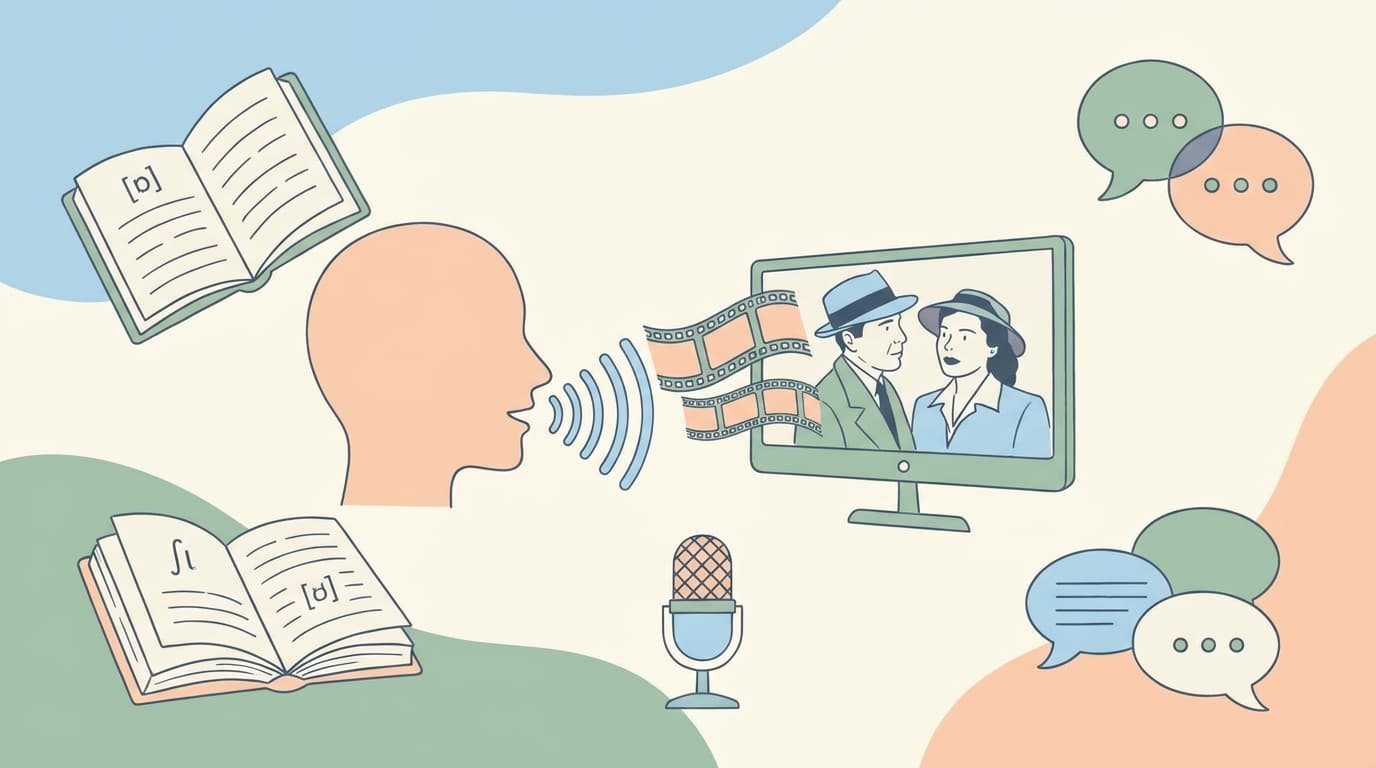
English Pronunciation for Non-Native Speakers: Shadowing Technique with Movie Clips
Many learners struggle to sound natural in English despite years of study. Shadowing movie clips can bridge the gap and boost fluency.
One tool that makes shadowing effortless is Corodomo. It lets you paste any YouTube video, auto‑generates bilingual subtitles, and offers AI word lookup, pronunciation practice, and instant quizzes. With Corodomo you can focus on listening, repeat exactly what you hear, and get feedback without leaving the platform.
- Why Shadowing Works
- Choosing Effective Movie Clips
- Setting Up Your Shadowing Session
- Step‑by‑Step Shadowing Routine
- Common Pitfalls and How to Fix Them
- FAQ
- Conclusion
Why Shadowing Works
Shadowing forces you to match native rhythm, intonation, and stress in real time. Your brain processes sound, meaning, and articulation simultaneously, creating stronger neural pathways.
Research on second‑language acquisition (an estimate) shows that learners who practice shadowing improve intelligibility by up to 20 % faster than those who rely on rote repetition.
Because movies contain authentic dialogue, you hear natural contractions, reduced forms, and emotional nuance that textbook sentences lack.
- Listen once, then repeat immediately without pausing.
- Focus on mimicking pitch and tempo, not just individual sounds.
- Record yourself and compare waveforms to the original.
She sells seashells – /ʃiː sɛlz ˈsiːʃɛlz/ – a classic tongue‑twister for stress patterns.
Choosing Effective Movie Clips
Not every scene is suitable for shadowing. Look for short (30‑90 seconds) segments with clear speech, minimal background noise, and a single speaker or a simple dialogue.
Comedy scenes often exaggerate pronunciation, while drama provides natural pacing. Subtitles should be accurate; Corodomo can generate bilingual subtitles that you can edit before you start.
Pick topics that interest you. Motivation stays high when the content feels relevant to your life or hobbies.
- Select clips with everyday vocabulary (e.g., ordering coffee, making a phone call).
- Avoid heavy accents in the first weeks; later, challenge yourself with regional varieties.
- Use Corodomo’s AI word lookup to flag unfamiliar terms instantly.
| Clip | Length | Why it works |
|---|---|---|
| “Friends” – Central Perk intro | 45 s | Clear conversational English, everyday slang. |
| “The Pursuit of Happyness” – Job interview | 70 s | Formal tone, useful for business settings. |
Setting Up Your Shadowing Session
Begin by loading the chosen clip into Corodomo. The platform will auto‑create side‑by‑side subtitles in English and your native language, if desired.
Activate the “CoroAI” pronunciation mode. It plays the audio at a slightly slower speed while preserving pitch, making it easier to catch each phoneme.
Prepare a notebook or digital note for quick jotting of new expressions. You can also use Corodomo’s flashcard generator to turn highlighted words into spaced‑repetition cards.
- Set volume to a comfortable level; use headphones for isolation.
- Enable the “loop” function to repeat the segment automatically.
- Turn on the “word‑by‑word” highlight to see where each syllable begins.
“I’m sorry, I didn’t catch that.” – /aɪm ˈsɒri aɪ ˈdɪdnt kætʃ ðæt/ – a polite request for clarification.
Step‑by‑Step Shadowing Routine
Follow this six‑minute routine daily. Consistency outweighs duration for busy learners.
1. **Preview** – Watch the clip once with subtitles on. Note any unfamiliar words.
2. **Listen & Repeat** – Play the clip at normal speed. Immediately repeat each line, matching rhythm.
3. **Segment** – Pause after each sentence. Say it three times, focusing on stress.
4. **Record** – Use Corodomo’s built‑in recorder. Compare your waveform to the original.
5. **Analyze** – Use the AI word lookup to check pronunciation of tricky sounds (e.g., /θ/ vs /ð/).
6. **Review** – Finish with a quick quiz generated by Corodomo to test meaning and spelling.
- Start with one clip per day; increase to two after a week.
- Keep a log of “improved” vs “still hard” sounds.
- Switch to a new genre every month to expose yourself to varied intonation.
| Step | Action | Goal |
|---|---|---|
| 1 | Watch with subtitles | Contextual understanding |
| 3 | Repeat three times | Muscle memory for stress |
| 5 | AI lookup | Correct articulation of problem sounds |
Common Pitfalls and How to Fix Them
Even motivated learners hit roadblocks. Recognising them early saves time.
**Pitfall 1: Over‑reliance on subtitles.** When you read faster than you listen, you miss the sound. Turn subtitles off after the first preview.
**Pitfall 2: Ignoring intonation.** Mimicking words without the rise‑and‑fall of native speech sounds robotic. Use Corodomo’s pitch‑graph to visualise contours.
**Pitfall 3: Stopping too often.** Frequent pauses break the flow and reduce the benefit of real‑time processing. Use the loop function to keep the rhythm steady.
- Gradually reduce subtitle visibility.
- Practice “shadow‑only” mode after three repetitions.
- Record a full segment without stopping, then review for errors.
“Could you pass the salt, please?” – /kʊd juː pɑːs ðə sɒlt pliːz/ – polite request at the dinner table.
FAQ
How long should a shadowing session last?
For busy learners, 5‑10 minutes daily is enough. Consistency beats marathon sessions that are hard to maintain.
Do I need a special microphone?
No. A standard headset or phone mic works. The key is clear playback, not high‑end equipment.
Can I use TV shows instead of movies?
Yes. TV episodes provide shorter, dialogue‑heavy scenes that are ideal for beginners.
Is shadowing effective for advanced learners?
Absolutely. Advanced students can focus on subtle features like linking, reduction, and